The product page is the decisive moment in your WooCommerce store. This is where visitors decide whether to add an item to cart or leave the site. In 2026, average e-commerce product page conversion rates range from about 2% to 4%, while the best-performing stores reach 5% to 8%. Small, thoughtful changes based on buyer psychology can create large improvements in sales without requiring extra traffic.
Shoppers arrive with three main unspoken questions:
What is this product and why should I want it?
Is it suitable for me?
Is it safe and simple to buy?
Are there any UGC or video product examples?
A strong product page answers these questions quickly, lowers mental effort, builds emotional trust, and uses proven principles such as social proof, cognitive ease, and fear of missing out to guide people toward purchase.
Why Product Page Optimization Matters More Than Ever
Many WooCommerce stores treat product pages like basic catalogs. High-converting pages work like skilled salespeople. Clear visuals, logical layout, and trust-building elements can increase purchase likelihood several times over compared to basic pages. People process images much faster than text, look for validation from others to reduce uncertainty, and leave quickly when the experience feels difficult.
Weak pages create confusion, overload, or feelings of risk, which lead to high bounce rates. Well-optimized pages create smooth mental processing, trigger herd behavior through visible proof, and prevent decision fatigue.
Even a small increase, such as moving from 2.5% to 4% conversion, delivers major revenue growth when applied to products with decent traffic.
Lead with Above the Fold Clarity and Strong Visuals
The first viewable area of the page decides whether people stay. Use clear visual hierarchy and mental ease to make information effortless to absorb.
Hero image first: Start with high-resolution, professional photos. Include multiple angles, zoom capability, and lifestyle shots showing the product in use or with scale references such as models holding it. Studies show that zoom features and contextual photos improve purchase rates, while low-quality images can cut intent in half.
Compelling headline: Combine important details with emotional appeal. For example, write “Ultra-Soft Organic Cotton Hoodie, All-Day Comfort Without Sweat” instead of simply “Men’s Hoodie”. Benefit-focused headlines connect emotionally right away.
Prominent price and call-to-action: Display the price clearly. Make the “Add to Cart” button large, use a high-contrast color such as orange or red to draw attention, and keep it visible while scrolling on mobile. Position these elements near the top to minimize effort.
Answer the “What is this?” question immediately so visitors do not need to scroll for essential information.
Write Benefit-Driven Copy That Sells Emotionally
Features provide information, but benefits create desire. Move from listing technical details to showing personal value.
Inverted pyramid structure: Place the strongest benefits at the top in the headline and subheadline, then add supporting details further down.
Bullet points for scannability: Use short, outcome-focused bullets. Write “Breathe easily during intense workouts” instead of “Breathable fabric material”.
Address common objections: Add sections such as “Why Customers Choose This” or a short FAQ to handle doubts about sizing, fit, durability, or care instructions.
This approach lowers mental effort and matches the way people prefer fast, relatable information over long blocks of text.
Build Trust with Social Proof and Trust Signals
People naturally follow what others do. Social proof remains one of the most powerful ways to increase conversions.
Reviews and ratings: Show star ratings, total review count, and selected positive review excerpts close to the buy button. Genuine customer feedback reduces hesitation.
User-generated content: Display real customer UGC like short videos of the product in everyday use when available. Authentic usage examples increase relatability.
Trust badges: Include icons for secure payment, money-back guarantees, free returns, or “Featured in” media mentions. These elements reduce perceived risk and create feelings of safety.
Position trust signals early on the page. Early reassurance can lift conversions noticeably by building authority and reciprocity.
Add UGC, Product Videos, and Customer Review Videos
Static images can only do so much. They show what a product looks like, but they don’t fully help shoppers imagine using it in real life.
That gap creates uncertainty.
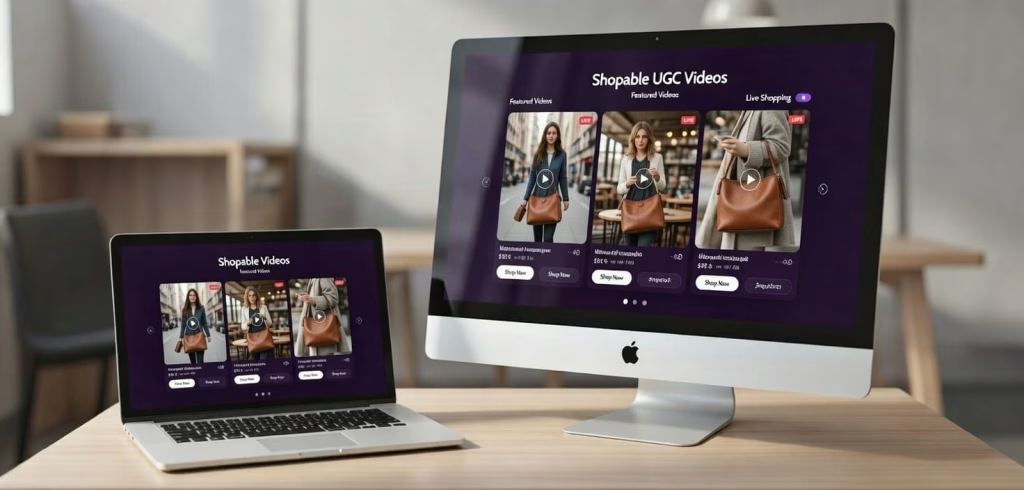
User-generated content (UGC), product demos, and customer review videos help close that gap. When people see real customers using the product, it feels more authentic and trustworthy. When they watch a short demonstration, they quickly understand how it works and whether it fits their needs.
Start by adding multiple media formats to your product pages. This can include 360-degree views, zoomed-in images for texture and detail, and short demo videos showing the product in action. These elements reduce doubt and make the product easier to evaluate.
Short-form videos are especially effective. Vertical, quick to watch clips match how people already consume content online. Embedding product demos or customer video reviews directly on your WooCommerce pages turns passive browsing into a more engaging experience.
For example, WordPress Plugins like ReelsWP make it possible to add shoppable short videos inside WooCommerce product pages. This can increase time on page and strengthen the emotional connection to the product.
From a psychological perspective, seeing a product in motion makes ownership feel more real. The more real it feels, the less risky the purchase appears. And when perceived risk goes down, conversions go u
Optimize for Mobile and Speed
Mobile traffic often accounts for 70% or more of visits. Pages that are not mobile-friendly create frustration.
Responsive design: Ensure images scale properly, buttons are large enough for thumbs, and text remains readable without pinching to zoom.
Fast loading times: Compress images, enable lazy loading, and minimize heavy scripts. Each extra second of load time can reduce conversions by around 7%. Quick pages feel more trustworthy and respect the preference for low-effort experiences.
Always test the mobile version first. Many shoppers abandon sites that feel clunky on phones.
Measure, Test, and Iterate
Optimization requires ongoing attention.
Track key metrics: Monitor add-to-cart rate, bounce rate, and time on page using Google Analytics or WooCommerce built-in reports.
Use heatmaps: Tools like Hotjar reveal where attention lands and where visitors drop off.
Run A/B tests: Compare variations such as different headlines, button colors, social proof placement, or video versus static images. Real data shows what actually influences buyer behavior.
Conclusion
A high-converting WooCommerce product page succeeds by matching the way people make decisions: quick answers, emotional benefits, built-in trust, and almost no friction.
Begin with your highest-traffic or highest-margin products. Review the visuals, rewrite copy to focus on benefits, strengthen social proof, and experiment with interactive elements. These psychology-based adjustments, centered on reducing doubt, increasing confidence, and simplifying the path to purchase, produce results far greater than their effort.
Focus first on improving your product pages. When they convert better, existing traffic becomes much more valuable and revenue grows significantly. Your visitors are already there. Now help them become customers.
FAQ
What is a good conversion rate for a WooCommerce store?
There isn’t one universal number, because conversion rates vary by industry, price point, and traffic source. However, many WooCommerce stores operate between 1% and 3%. If you’re below that range, there’s usually room for improvement. Even increasing your rate by 0.5% can have a meaningful impact on revenue.
What is the most important element of a high-converting product page?
In 2026, the most important element of a high-converting product page is real product video and authentic user-generated content (UGC).
Modern buyers don’t rely only on product descriptions or static images. Before adding to cart, they want to:
- See real-life examples
- Watch the product in action
- View influencer or UGC creator reviews
- Understand how it solves a real problem
That’s why successful brands now prioritize short-form product videos, customer reviews in video format, and influencer-style demonstrations.
By showcasing UGC and product videos using vertical video player, you create a scrollable, insta style video reels directly on your product page. This increases trust, keeps visitors engaged longer, and significantly improves conversion rates.
In today’s market, proof through video converts better than persuasion through text.
How can I reduce checkout abandonment in WooCommerce?
Start by removing unnecessary friction. Allow guest checkout. Reduce the number of required form fields. Be transparent about shipping costs early in the process. Also ensure that your checkout loads quickly and works smoothly on mobile devices.
Does adding product videos improve conversion rates?
In many cases, yes. Videos help customers understand how a product works in real life, which reduces uncertainty. Short-form product demonstrations can improve engagement and increase buyer confidence, especially for products that require explanation.